That moment when you take a sip… and something tastes off.
Reusable water bottles are meant to be a clean, eco-friendly upgrade however without proper cleaning, they can quietly turn into a breeding ground for odour-causing bacteria.
The good news? Keeping your bottle fresh, safe, and odour-free is simple once you know what actually works.
How to Clean a Reusable Water Bottle (Quick Steps)
If you just want the fast method, here it is:
- Rinse your bottle with warm water after each use
- Add a few drops of dish soap and fill with warm water
- Use a bottle brush to scrub the inside
- Clean the lid, threads, and mouthpiece thoroughly
- Rinse well to remove all soap residue
- Leave all parts open to air dry completely
This alone prevents most odours and bacteria buildup.
For a more detailed eco-focused guide on maintaining hygiene and reducing bacteria buildup, see our full breakdown on cleaning reusable water bottles properly to remove odours and bacteria .
Why Cleaning Your Bottle Properly Matters
Even if your bottle looks clean, moisture + warmth creates the perfect environment for bacteria to grow – especially around lids and seals.
Regular cleaning:
- Prevents unpleasant smells
- Reduces bacteria buildup
- Extends the life of your bottle
- Keeps your hydration routine safe
And from a sustainability perspective, proper care means your reusable bottle actually stays reusable – not replaced every few months.
Daily Cleaning Method (Best Habit to Build)
For everyday use, consistency beats intensity.
Simple daily routine:
- Rinse immediately after use
- Wash with warm soapy water
- Focus on high-contact areas (lid, spout, threads)
- Let it dry fully before sealing
Pro tip: Never leave your bottle closed while still damp – that’s where odours begin.
Deep Cleaning Methods for Reusable Water Bottles (Remove Odours & Bacteria)
If your bottle smells or hasn’t been cleaned properly in a while, use one of these methods:
- Add 1–2 teaspoons of baking soda
- Fill with warm water
- Let sit for several hours or overnight
- Scrub and rinse thoroughly
✔ Great for removing lingering smells
- Fill bottle halfway with white vinegar
- Top up with warm water
- Let sit for 1–2 hours
- Rinse well and wash with soap
✔ Helps break down buildup and kill bacteria
- Pour hot (not boiling) water into the bottle
- Let sit for a few minutes
- Wash as normal
✔ Quick refresh between deep cleans
- Only use if your bottle is labelled dishwasher-safe
- Place on top rack
- Remove lid seals if possible
✔ Convenient, but not always thorough for lids
Drying Your Bottle Properly (The Step Most People Skip)
Cleaning isn’t complete until your bottle is dry.
Best drying practices:
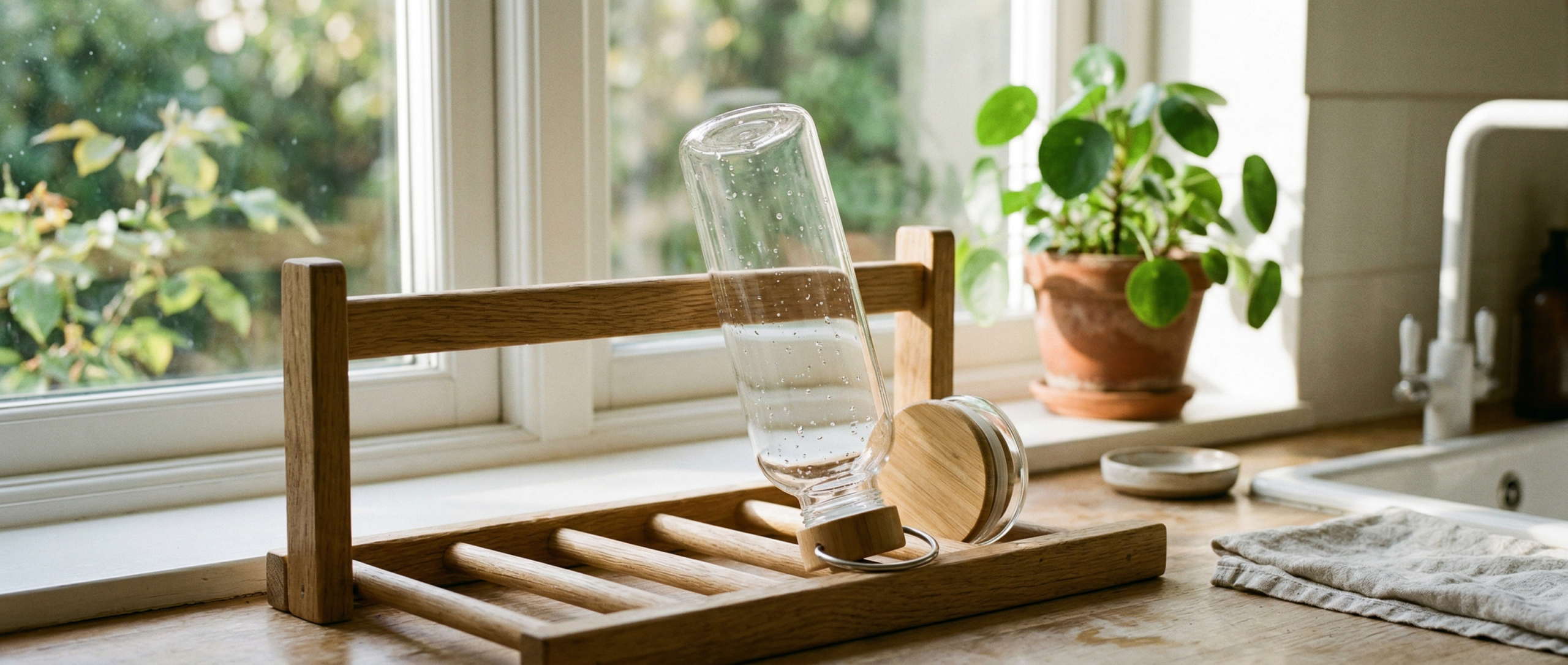
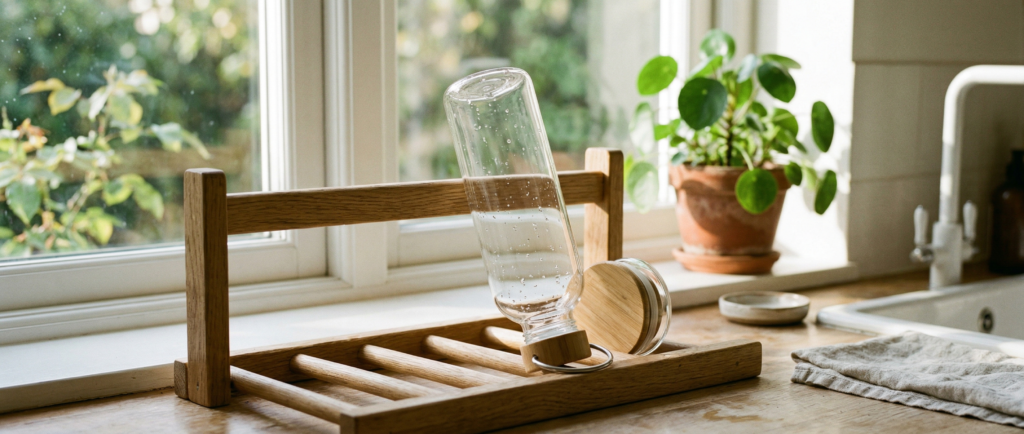
- Air dry upside down
- Keep lid off while drying
- Separate all removable parts
- Avoid sealing any moisture inside
Moisture trapped inside = bacteria growth waiting to happen.
Common Mistakes to Avoid
These small habits are often the reason bottles start to smell:
- Only rinsing with water (no soap)
- Forgetting to clean the lid and mouthpiece
- Leaving the bottle sealed while damp
- Skipping regular deep cleans
- Using sugary or flavoured drinks without extra cleaning
Fix these, and you eliminate 90% of problems.
Frequently Asked Questions
How often should I clean my reusable water bottle?
You should rinse it daily and wash it with soap at least once a day if used regularly.
Can bacteria grow in a reusable water bottle?
Yes, especially in moist environments like lids and seals if not cleaned and dried properly.
What is the best natural way to clean a water bottle?
Baking soda and vinegar are both effective natural options for removing odours and bacteria.
Why does my water bottle still smell after washing?
Odours often come from the lid, seals, or trapped moisture rather than the bottle itself.
Is it safe to use a dishwasher?
Only if your bottle is dishwasher-safe. Even then, hand cleaning is often more effective for lids.
The Bigger Picture: Clean Bottle, Better Habit
A reusable water bottle is one of the simplest eco-friendly swaps you can make but only if it stays clean and usable.
Taking a few minutes each day to clean and dry your bottle properly:
- protects your health
- reduces waste
- helps your bottle last for years instead of months
It’s a small habit that quietly supports a more sustainable lifestyle.
Brought to you by SMARTYSIP – Better bottles, better habits, less waste.